
I remember feeling it for the first time when I arrived at my internship at The New York Times. It was May of 2013 and I was sitting down with Chief Diversity Officer and Vice President, Mrs. Dancy, and I was in a state of disbelief. I told her I didn’t understand how I got into the program. In fact, I remember asking her, “What did you see in me?”
At that time, I wondered if I belonged there at all. After all, I hadn’t even met all the requirements in the application process. But, there I was, miles away from my newborn knowing how much I’d already sacrificed and I didn’t feel qualified. Deep down I feared that everyone else would find out that I didn’t belong there, too.
I didn’t know it then, but what I was experiencing during that sophomore year of college were typical feelings of imposter syndrome. Up to 82% of people face feelings of imposter syndrome according to the Journal of General Internal Medicine. Imposter syndrome is also known as fraud syndrome and is a pattern of behavior in which people find it difficult to internalize their accomplishments, skills and experience. People with imposter syndrome fear being exposed as a fraud. Women, especially women of color, are most at risk of imposter syndrome. The paradox is that people who struggle with imposter syndrome are not frauds – they are high achievers who are extremely skilled.
A few months ago, I moved to a new state and landed a new gig in marketing. New responsibilities were added – managing the social media calendar, creating social media content and campaigns, designing graphics and holding down the fort while my supervisor was out on maternity leave. That’s when those feelings and thoughts surfaced up again, despite having an extensive background. What if I’m not good enough? What if they were just so desperate to fill this position?
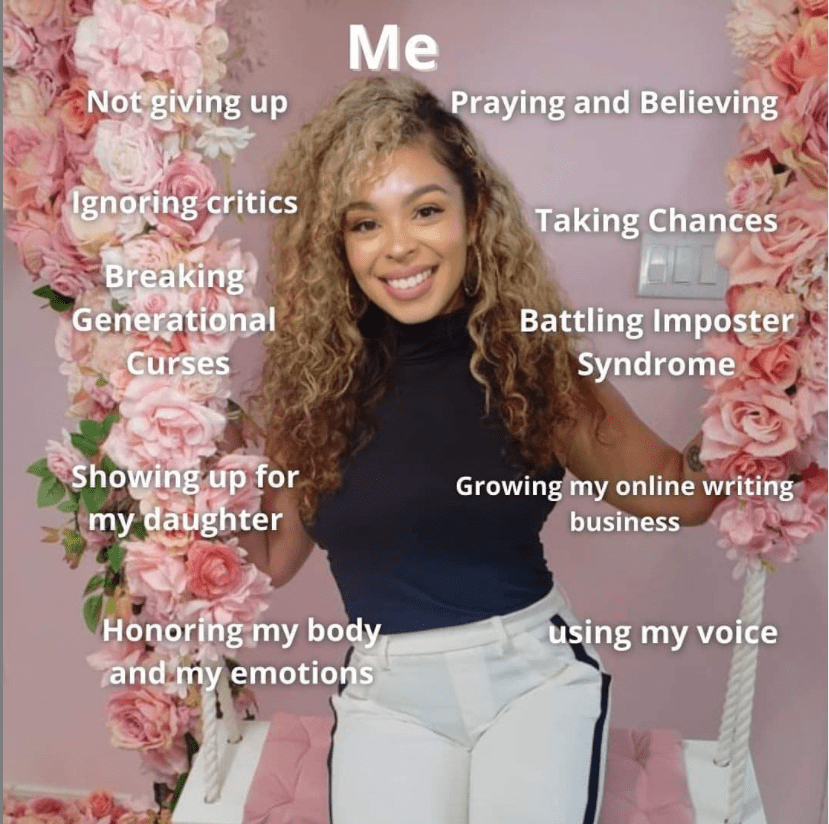
However, this time around, I had read enough books and had done enough research to recognize the signs of imposter syndrome creeping up, and I knew I needed to get out of my head. First, I realized that my imposter feelings were representative of my own self-perception and not the way my co-workers saw me. Second, I told people I was struggling. I admitted to my friends that I was afraid I wasn’t as talented as I appeared to be, and they responded with empathy and kindness. By putting myself out there, I found so much comfort and encouragement.
If you are going through a similar phase of suffering in silence from imposter syndrome, here are some things you can try:
- Recognize imposter syndrome when it happens. Some symptoms of imposter syndrome include feelings of inadequacy, anxiety, self-doubt and distrusting your capabilities.
- Shift the focus from “the need to be perfect” to “I’m still learning and that’s great!” In other words, focus more on the process of growing. Be teachable! When you adopt a growth mindset, you are more equipped to deal with challenges and criticism.
- Call a friend. Rather than keeping the feelings of inadequacy to yourself, talk to people you confide in – people that see you outside of your workplace. My friends and old co-workers gave me some of the best advice to get out of my head and back in the game.
- Ask for assistance. Recognize that you have the right to admit when you don’t know how to do something. I was so happy when I got to set up a one-on-one with my supervisor to discuss my personal goals, ask questions and get more clarity and direction where I felt I needed it. I walked away feeling more confident. And, guess what? In our conversation she said, “When I interviewed you I knew you were tenacious and I knew you’d come in here and roll up your sleeves.”
- Speak, stand, sit with assertiveness. This advice came from my former supervisor the morning I called her just before making a virtual presentation at my new job. She advised me to sit straight and to allow both of my feet to feel the ground beneath me. Social psychologist Amy Cuddy’s research reveals that we can change other people’s perceptions – and even our own body chemistry – simply by changing body positions in this TED talk.
Last but not least, give yourself credit and grace. It’s so hard to reach your potential if you’re always questioning your worth. If you’ve landed a new job, like me, and you feel like a fraud, trust that the people who hired you evaluated you and believe in you. It is OK to not be OK. There’s no need to “fake it to make it.” Those who love you unconditionally will be there for you when you need a confidence boost.
 Mommy Finger, Baby Finger
Leave a comment